Interactive transcript · 101 lines
Welcome to TalkCastTalk, the podcast where we dive deep into the world of literature and discover
欢迎收听 TalkCastTalk,这档播客带大家深入文学世界,探索
stories that are truly beyond their time.
那些真正超越时代的故事。
I am your host, William.
我是主持人威廉。
You know, throughout history, humanity has always been on a quest for a perfect world.
你知道,纵观历史,人类一直在寻求一个完美的理想世界。
Thomas More called it utopia.
托马斯·莫尔称之为乌托邦。
James Hilton named it Shangri -La.
詹姆斯·希尔顿将其命名为香格里拉。
But more than 1600 years ago, during a time of great chaos and war in China, a poet named Tao
但在 1600 多年前,在中国一个动荡战乱的年代,一位名叫陶
Yuanming envisioned his own paradise.
渊明的诗人构想了他心中的世外桃源。
It is a place known as the Peach Blossom Spring, or Tao Huayuan.
那就是著名的《桃花源记》,也就是桃花源。
Today, we are incredibly honored to have Dr.
今天,我们感到非常荣幸能邀请到
Claire with us.
克莱尔博士与我们在一起。
Claire is a professor of classical Chinese literature and a passionate translator who has spent
克莱尔是古典中国文学的教授,也是一位充满热情的翻译家,她倾注了
decades studying the poets of the Wei and Jin dynasties.
几十年时间研究魏晋朝代的诗人。
Welcome, Claire.
欢迎你,克莱尔。
Thank you, William.
谢谢你,威廉。
It is wonderful to be here with you and our listeners.
很高兴能来到这里,与你和听众朋友们交流。
The Peach Blossom Spring is a text that is very close to my heart.
《桃花源记》是一篇对我意义非凡的文章。
I remember reading it for the first time as a student, and its serene, rustic beauty immediately
我记得学生时代第一次读到它时,它那种宁静而质朴的美立刻
captivated me.
深深吸引了我。
It was written in the year 421 AD, during a period of relentless warfare and political instability.
它写于公元 421 年,当时持续不断的战乱和政治局势动荡不安。
For a Tao Yuanming, who actually resigned from his government post to live as a simple farmer, this
对于辞去官职、甘当普通农民的陶渊明来说,这个
story was not just a fairy tale.
故事绝非仅仅是一个童话。
It was a profound expression of his longing for peace, social equality, and a harmonious
它是他对和平、社会平等以及与自然和谐深刻的表达,
relationship with nature.
即与自然相处的关系。
When listeners hear this translation today, I highly recommend paying attention to the transition
当今天的听众聆听这段译文时,我非常建议大家留意那个转变过程:
from the narrow, dark cave to the sudden, breathtaking openness of the hidden valley.
从狭窄昏暗的溶洞,突然跃入那令人屏息、豁然开朗的隐秘山谷。
It is a beautiful metaphor for finding inner peace.
这是对寻找内心平静的绝妙象征。
That is beautiful, Claire.
这太美妙了,克莱尔。
I can already feel the magic of the story.
我已经能感受到这个故事的奇妙魔力了。
Well, without further ado, let us journey into this legendary paradise.
那么,不再啰嗦,让我们一起踏入这个传奇的世外桃源吧。
Claire, the floor is yours.
克莱尔,接下来发言权交给你了。
During the Taiwan era of the Jin dynasty, a fisherman from Wu Ling was making a living by fishing.
晋太元中,武陵人捕鱼为业。
One day, he paddled along a stream, forgetting how far he had gone.
缘溪行,忘路之远近。
Suddenly, he came upon a peach blossom grove.
忽逢桃花林,
For hundreds of steps along both banks, there were no other trees except peach trees.
夹岸数百步,中无杂树,
The fragrant grass was fresh and beautiful, and fallen petals lay in colorful profusion.
芳草鲜美,落英缤纷。
Marveling at this, the fisherman pressed on, wanting to see where the forest ended.
渔人甚异之,复前行,欲穷其林。
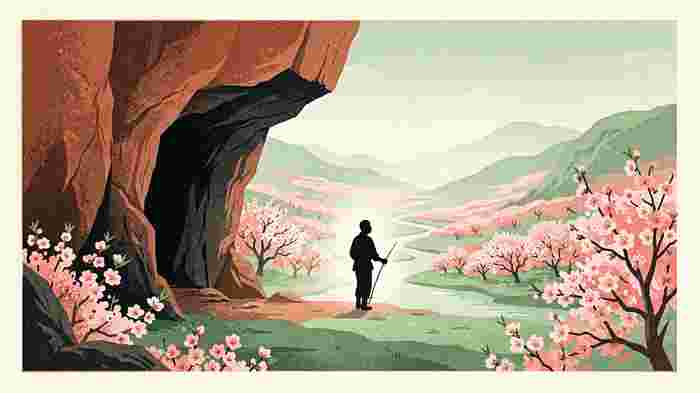
The grove ended at the source of the stream, where he found a hill.
林尽水源,便得一山,
In the hill, there was a small opening, through which a faint light seemed to glimmer.
山有小口,仿佛若有光。
He left his boat and entered through the opening.
便舍船,从口入。
At first, it was extremely narrow, barely wide enough for a single person.
初极狭,才通人。
After walking a few dozen paces, it suddenly opened up into a broad, flat valley.
复行数十步,豁然开朗。
The land was spacious, and houses stood in neat order.
土地平旷,屋舍俨然,
There were fertile fields, beautiful ponds, and groves of mulberry and bamboo.
有良田、美池、桑竹之属。
Paths crossed between the fields, and the sounds of crowing roosters and barking dogs could be heard.
阡陌交通,鸡犬相闻。
People were coming and going, working in the fields, and both men and women dressed exactly like outsiders.
其中往来种作,男女衣着,悉如外人。
The elderly with yellowing hair and children with tufts of hair were all happy and content.
黄发垂髫,并怡然自乐。
Upon seeing the fisherman, they were greatly surprised, and asked where he had come from.
见渔人,乃大惊,问所从来。
He answered them in detail.
具答之。
They then invited him to their homes, setting out wine and killing chickens to prepare a meal.
便要还家,设酒杀鸡作食。
When others in the village heard of his arrival, they all came to inquire.
村中闻有此人,咸来问讯。
They told him that their ancestors had fled the chaos of the Qin dynasty, bringing their wives,
自云先世避秦时乱,率妻子
children, and fellow villagers to this isolated place, and had never left.
邑人来此绝境,不复出焉,
They had been cut off from the outside world ever since.
遂与外人间隔。
They asked what dynasty it was now, having no knowledge of the Han, let alone the Wei and Jin dynasties.
问今是何世,乃不知有汉,无论魏晋。
The fisherman related everything he knew, and they all sighed with regret.
此人一一为具言所闻,皆叹惋。
The other villagers took turns inviting him to their houses, serving wine and food.
余人各复延至其家,皆出酒食。
After staying for several days, he took his leave.
停数日,辞去。
The villagers warned him, saying, it is not worth telling outsiders about us.
此中人语云:“不足为外人道也。”
Once out, he found his boat and retraced his path, carefully marking the way at every turn.
既出,得其船,便扶向路,处处志之。
When he reached the prefecture town, he visited the governor and told him what had happened.
及郡下,诣太守,说如此。
The governor immediately sent men to accompany him, trying to find the marks he had made, but they
太守即遣人随其往,寻向所志,遂
became lost and could never find the way again.
迷,不复得路。
Lu Jiji of Nanyang, a man of high character, heard of this and eagerly planned to go.
南阳刘子骥,高尚士也,闻之,欣然规往。
But before he could accomplish it, he fell ill and died.
未果,寻病终。
Since then, no one has ever inquired about the way again.
后遂无问津者。
Thank you so much, Claire.
非常感谢你,克莱尔。
That was an absolutely mesmerizing reading.
那真是令人陶醉的朗诵。
Your voice perfectly captured the transition from the mysterious journey along the stream to the
你的声音完美捕获了沿溪神秘之旅到……的过渡,
tranquil, warm atmosphere of the village.
到村庄宁静、温暖的氛围。
I particularly love the description of the paths crossing and the sounds of roosters and dogs.
我特别喜欢对阡陌交通和鸡犬相闻的描绘。
It feels so vivid, yet so peaceful.
感觉如此生动,却又如此宁静。
Thank you, William.
谢谢你,威廉。
Yes, that specific imagery, paths crossing and the sounds of domestic animals, is incredibly
是的,那种具体的意象——阡陌交通、鸡犬相闻——极其
powerful in Chinese culture.
在中国文化中具有强大的震撼力。
It represents the ultimate piece of rural life, far removed from the court intrigues and battlefields.
它代表了乡村生活的极致,远离朝廷勾心斗角与战场。
But the ending is always what haunts readers.
但其结局总是让读者萦绕于心。
The fact that the fisherman marked his way, but could never find it again, suggests that paradise is
渔人做了标记却再也找不到路,这表明世外桃源并非
not a geographical location you can map out.
一个可以在地图上标出的地理位置。
It is a state of mind, or perhaps a fleeting moment of grace. Indeed.
它是一种心境,抑或是一抹短暂的恩宠。确实如此。
Once you seek it with greed or curiosity to show others, it vanishes.
一旦出于贪婪或向他人炫耀的好奇心去寻觅它,它便消失了。
It is a powerful lesson for our modern, hyper -connected lives.
这对于我们现代、高度互联的生活是一个深刻的启示。
Well, this brings us to an interesting question for our listeners today.
好了,这就引出了今天给我们听众的一个有趣的问题。
Do you think the Peach Blossom Spring was just a beautiful dream of Tao Yuanming?
你认为《桃花源记》只是陶渊明的一个美好梦想吗?
Or does such a sanctuary actually exist within our own hearts?
还是说这样一片避难所确实存在于我们自己的内心深处?
Where do you go to find your own Peach Blossom Spring when the modern world gets too overwhelming?
当现代世界令人感到不堪重负时,你会去哪里寻找属于自己的桃花源?
Please write down your thoughts in the comments section below, or check out what other listeners
请在下方的评论区写下你的想法,或者看看其他听众
have shared.
分享了什么。
I would love to read your answers.
我很乐意阅读大家的回答。
It is always fascinating to see how this ancient story resonates with people today.
看到这个古老的故事在今天依然能与人们产生共鸣,总是让人感到十分有趣。
Thank you for having me, William.
感谢你的邀请,威廉。
The pleasure was all ours, Claire.
这是我们的荣幸,克莱尔。
To our listeners, if you enjoyed this episode, please consider joining our TalkCast membership,
各位听众,如果你喜欢本期节目,请考虑加入我们的 TalkCast 会员,
subscribing, and sharing this episode with your friends.
订阅并与你的朋友分享本期节目。
Your support keeps us going.
您的支持是我们前进的动力。
Don't forget that the English and Chinese texts, along with the audio of this series, are regularly
请不要忘记,本系列的中英文文本以及音频都会定期
updated on our website at www .talkcast .top.
在我们的网站 www.talkcast.top 上更新。
Please visit us there.
欢迎访问我们的网站。
Also, let us know in the comments which literary pieces you would like us to read next.
此外,也请在评论中告诉我们你希望我们下次朗读哪些文学作品。
We might just choose your suggestion for our next show.
我们很可能会在下一期节目中采纳你的建议。
Until next time, keep reading, keep listening, and keep searching for your own Peach Blossom Grove. Goodbye!
下期再见,保持阅读,保持倾听,继续寻找属于你自己的桃花源。再见!